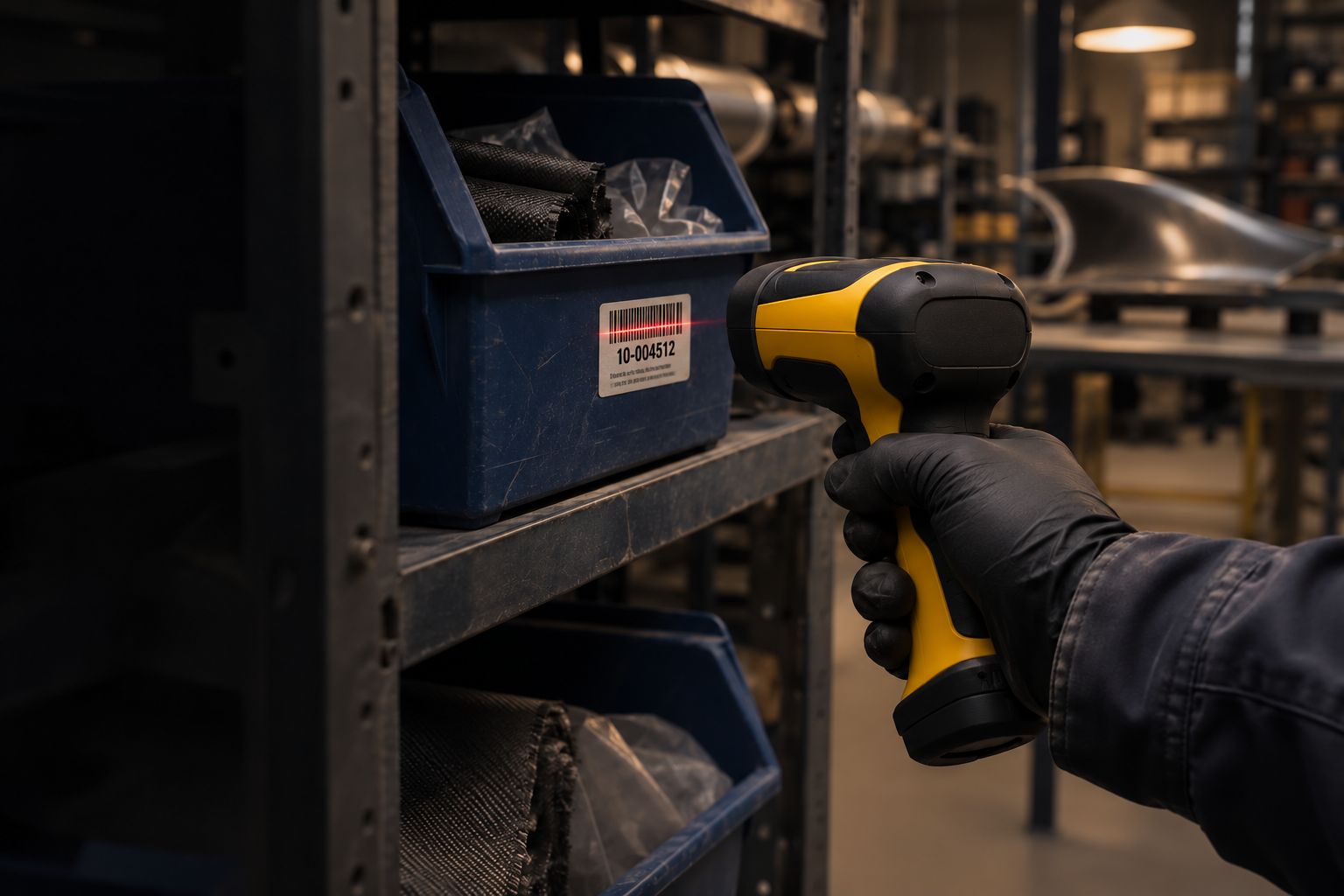
A UAE manufacturer that has just moved from R&D into production — composite, metal and electronic parts. Nobody could say what was in stock or where it was. When the CEO asked us to accelerate, the stores went live seven days later, about four weeks ahead of plan, without skipping a single rehearsal.
Moving from R&D into production changes what a stores has to do. Prototypes can be built from whatever is on the shelf; a production line cannot.
Nobody knew how much stock there was, or where, across several storage places. The same part went by different names. Urgent parts bought on petty cash never reached the stock records at all. Purchase approvals by the CEO were on paper. Shortages were found when a build was already waiting for the part.
Engineering IP had to stay in the building, so everything had to run on-premise, on the client’s own servers.
Discovery on 22 September, kickoff on 1 October. The engineering drawing vault (PDM) server was in service on 11 October, and the ERP was installed on the client’s own test server on 4 November. The plan said go-live on 14 December.
Around 9 November the CEO asked us to accelerate. The baseline stock count ran on 15 November and the stores went live in production on 16 November — seven days after the request. Handhelds, offline and locked down, and purchasing followed on 18–19 November.
The data came first. Every part got an 8-digit number — a class code plus six digits — and a noun-first name, across 18 part classes. We analysed 225 historical purchase orders and normalised their 848 order lines into 719 items, so the catalogue started from what the company actually buys. Every store place got a code: 108 of them, with 225 barcode and QR part labels. Serial or batch tracking is set by how critical the part is, and every issue from stores is charged to a project.
Purchasing runs on 108 vendors. Purchase orders print in the company’s own layout and terms, each order carrying its own terms and liquidated damages. The signatory is chosen by order value, and no order is confirmed until the signed copy is attached.
The stores went live on 16 November, about four weeks ahead of the original plan, with 257 engineering parts each carrying one number, one name and a coded place. Handhelds and purchasing were ready by 19 November.
Purchasing is controlled in the system: the signatory is set by order value, and no order is confirmed without the signed copy attached. Petty-cash purchases can now be received into stock like any other delivery.
Training was delivered as narrated videos — 13 chapters, 58 steps — and a 41-page guide, and everything runs on the client’s own servers.
Faster is only safe
when every change is rehearsed first.
Find the shortage in the stores,
not on the shop floor.